More than 90 percent of global fisheries are already fully exploited or overfished, leaving only 7 percent with any room to recover. Into this fragile seascape came the so-called “Blue Revolution,” promising to save wild fish by farming them instead.
Over the past four decades, industrial fish farming has grown more than tenfold—yet wild fish populations continue to collapse, not recover. Despite this failed track record, the industry keeps expanding, fueled by five myths that hide its true costs.

Far from easing the burden on wild fisheries, industrial aquaculture relies on small coastal fish from West Africa and South America to feed high-value fish like salmon for wealthy markets—a form of food colonialism that deepens overfishing.¹
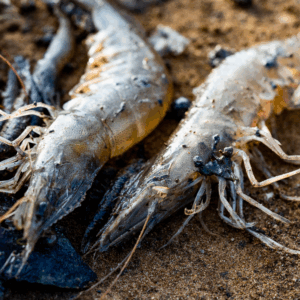
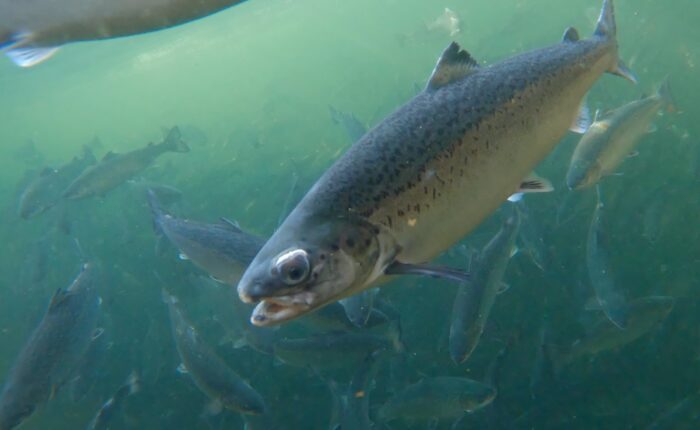
The industry isn’t just satisfying existing demand—it is creating new demand by manipulating policymakers, discrediting scientists, and misleading consumers, all to fuel profits and expansion.² (Photo: Seb Alex / We Animals)
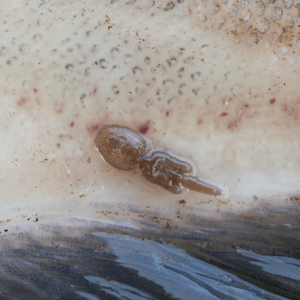
Behind claims of health benefits lie crowded farms rife with disease, parasites, and drug use—conditions that contaminate oceans and undermine the promise of “clean” protein.³
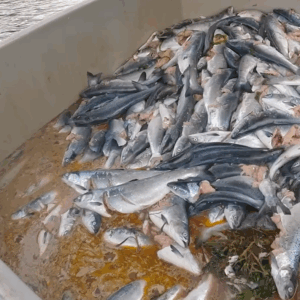
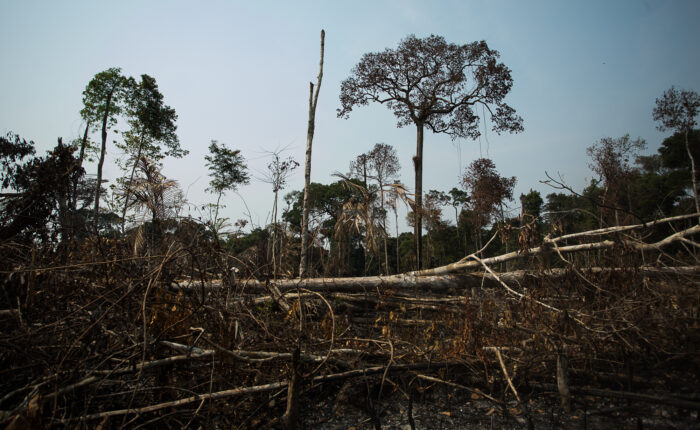
Industrial aquaculture has a high carbon toll. Feed production is the main driver of emissions, while also destroying ocean and rainforest carbon sinks. In shrimp farming, clearing mangroves has devastated another of the planet’s most effective carbon stores.⁴

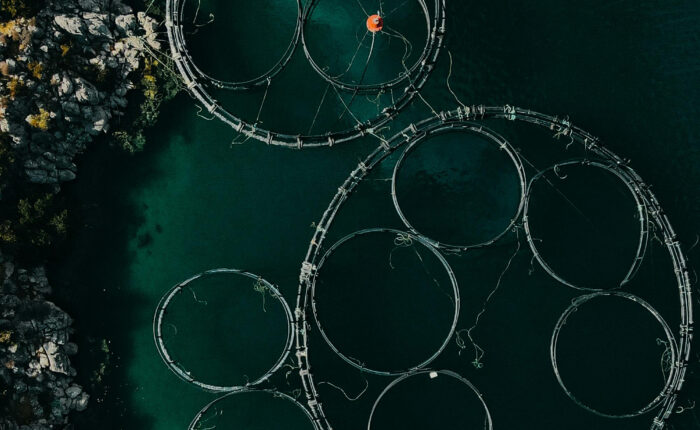
Because aquaculture certifications are shaped and funded by industry, standards remain weak and enforcement limited. While they may reduce some harms, this structure ultimately greenwashes an unsustainable model to consumers and foodservice buyers.⁵ (Photo by of an ASC-certified farm by Abolish Salmon Farming)
Reducing demand for fish and crustaceans is the most powerful step you can take to protect our oceans.
Avoid farmed salmon and shrimp, two of the most resource-intensive and ecologically damaging products.
Most “sustainable seafood” labels are built to protect the industry’s reputation, not our oceans.
The Aquaculture Accountability Project seeks to challenge the myths of “sustainable seafood” that are perpetuating its growth. Industrial fish farming—the fastest-growing form of factory farming—markets itself as the answer to overfishing, yet fuels the very crises it claims to solve. By holding this industry accountable and engaging food and climate leaders, we aim to slow its growth, reduce unsustainable sea animal consumption, and advance a truly ocean-friendly food system.
The AAP is a partnership with Farm Forward.